- 1. Why Faceless Brands Work in 2025
- 2. Platforms Where Faceless Brands Thrive
- 3. Core Principles of a Faceless Social Media Brand
- How to Build a Faceless Social Media Brand
- 4.1 Choose a Buildable Niche (Not a Broad One)
- 5. Building Trust Without a Personality
- 6. Tools & Automation to Scale Faceless Brands
- 7. Common Pitfalls to Avoid
- 8. How Reachism Approaches Faceless Brand Growth
- 9. FAQs
- 10. Conclusion
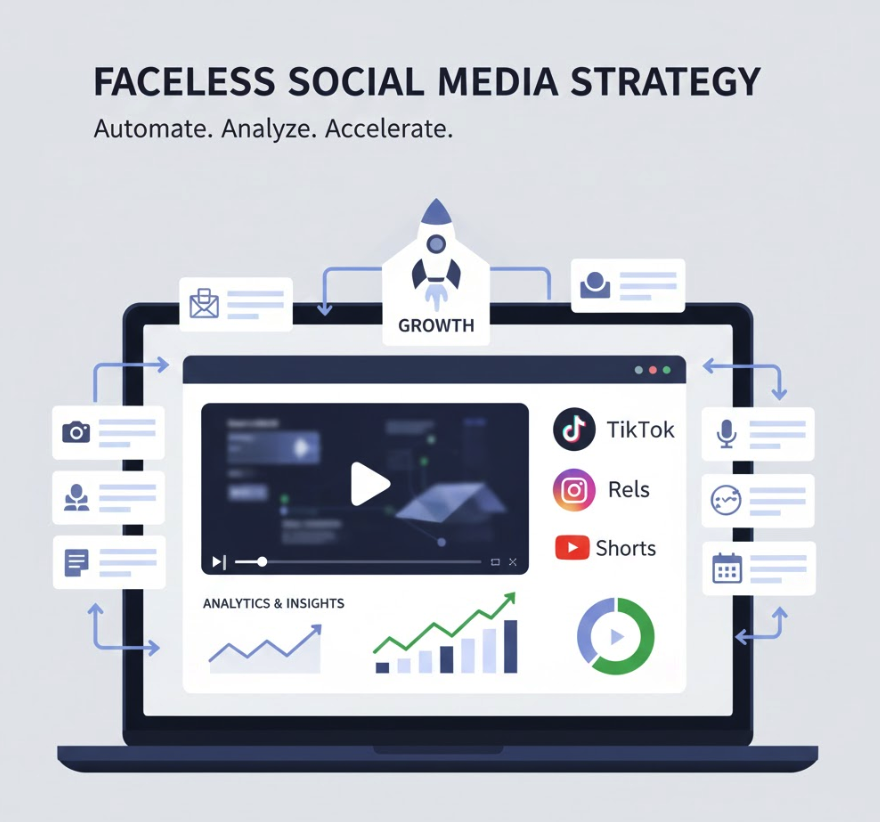
Not all social media brands need a face. Some of the fastest-growing accounts in 2025 operate entirely without showing a creator or personality on camera. Instead, these brands leverage content, design, and strategy to communicate identity, authority, and value.
Faceless brands are scalable, protect privacy, and shift the audience’s focus entirely onto content and value rather than personality. This detailed guide explains how to create, grow, and monetize a faceless social media brand.
1. Why Faceless Brands Work in 2025
Faceless brands are thriving because audiences increasingly care less about who is behind the account and more about the value delivered consistently.
Benefits include:
Scalability: You can hire writers, designers, or animators without impacting brand identity.
Privacy: Protect your personal life and reduce risk.
Focus on Content: The content itself becomes the hero, increasing trust in the brand’s value.
Successful examples include finance pages, AI tools, quote accounts, and niche educational content on Instagram, TikTok, and YouTube Shorts.
2. Platforms Where Faceless Brands Thrive
TikTok & Instagram Reels: Short-form videos allow voiceovers, animations, or text overlays. Example: A faceless finance account breaking down “3 Ways to Save $500 a Month” using captions, charts, and stock footage.
YouTube: Tutorials, animations, slideshows, and compilation videos work exceptionally well. Example: Channels that create “Top 10 Productivity Apps” videos using screen recordings.
Pinterest: Infographics, step-by-step visual guides, or lifestyle tips can build traffic without revealing a creator’s face.
LinkedIn & Twitter/X: Thought leadership and tips-driven accounts can share insights as text, carousel posts, or threaded posts. Example: @themotivationhub posts business advice without showing a founder.
Key Insight: Platforms prioritize clarity, retention, and relevance, which faceless accounts can deliver efficiently.
3. Core Principles of a Faceless Social Media Brand
Consistency: Every post should have a recognizable tone, visual style, and structure. For example, a productivity-focused account could use a uniform background color, font, and animation style across posts.
Value-First Mindset: Each piece of content should solve a problem or entertain. Example: A faceless personal finance TikTok explaining “3 mistakes to avoid when investing” provides direct utility.
Repeatable Systems: Use templates, workflows, and content frameworks. Example: The “Problem → Solution → Takeaway” format can be applied to multiple topics without showing a face.
Trust Through Authority: Even without a human presence, authority can be built with accurate data, reliable sources, and professional design. Example: A science animation channel citing research papers to explain complex concepts.
How to Build a Faceless Social Media Brand
4.1 Choose a Buildable Niche (Not a Broad One)
A faceless brand only works if the niche is specific enough to create repeatable content.
What works:
Problems people actively search for
Topics that can be explained visually or with text
Niches with multiple angles and subtopics
Examples of buildable niches
“Personal finance for beginners”
“AI tools for creators”
“Daily productivity systems”
“Marketing psychology explained simply”
What does NOT work
Generic motivation
Lifestyle with no angle
Trend-only content
4.2 Branding Without a Face
Even without a human presence, branding remains crucial.
Key elements:
Logo & Colors: Example: Minimalist icons and a consistent color palette signal authority and recognition.
Typography: Bold, readable fonts for captions; playful fonts for entertainment content.
Naming: Names should reflect niche or value. Example: @SmartMoneyTips instantly signals content focus.
Tip: Your brand identity must stand out even without a face viewers should recognize your content instantly.
4.3 Storytelling and Voice
A distinct voice gives personality without showing a person.
Practical examples:
Voiceover narration for tutorials or explainer videos.
Animated characters to guide the audience through content.
Text-driven storytelling: “Here’s what nobody tells you about credit scores…”
Tip: Maintain consistent tone serious, humorous, or motivational across all posts.
4.4 Visual Identity
Visual consistency is key for recognition.
Examples:
Stock footage with animated captions
Motion graphics for infographics
Branded templates for slideshows and carousels
Case Study:
A faceless TikTok marketing account uses a red-and-white template for every post with a specific style of transitions, making videos instantly recognizable without showing a person.
5. Building Trust Without a Personality
Trust is built on accuracy, predictability, and value.
Strategies:
Cite sources in captions or video overlays. Example: “According to Pew Research, 65% of adults prefer video tutorials…”
Use consistent posting schedules so your audience knows what to expect.
Showcase testimonials or case studies anonymously.
Tip: A faceless brand can appear credible if content is well-researched and visually professional.
6. Tools & Automation to Scale Faceless Brands
Design Tools: Canva, Figma, Adobe Illustrator
Video Tools: CapCut, InVideo, Lumen5, Descript
Automation & Scheduling: Buffer, Zapier
Analytics: TikTok Analytics, Instagram Insights,
Example Workflow:
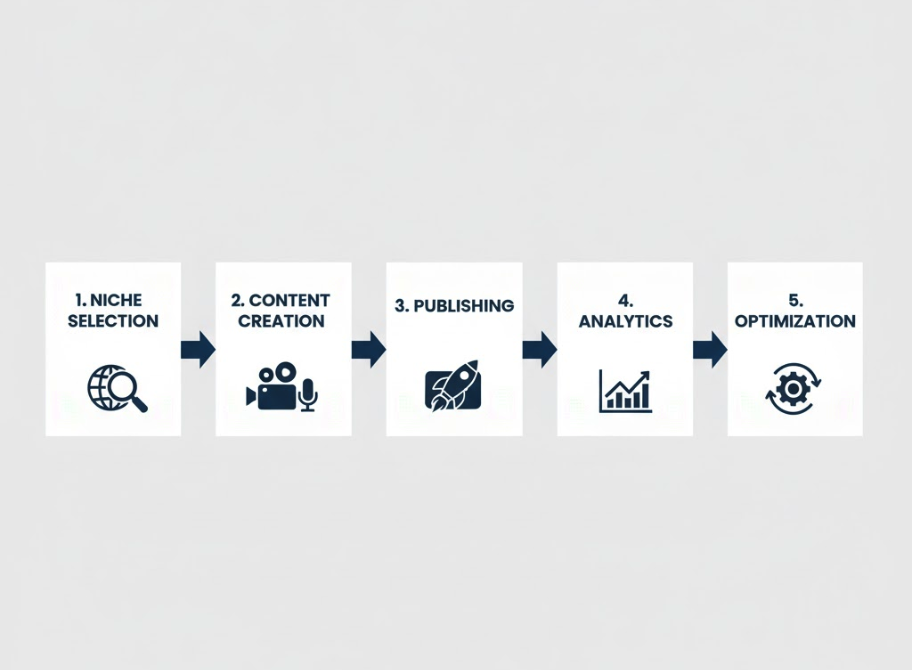
Write 10 scripts for a week.
Create videos using templates in InVideo.
Schedule posting with Later.
Track performance and adjust content for higher retention.
Automation ensures growth without relying on personal presence.
7. Common Pitfalls to Avoid
Copying trends without unique value
Inconsistent branding or visual style
Posting without a content system
Ignoring platform optimization rules
Overcomplicating content without clear messaging
Example: A faceless TikTok trying to post a variety of unrelated trends may get views, but won’t convert viewers to followers because the niche isn’t clear.
8. How Reachism Approaches Faceless Brand Growth
At Reachism, we focus on:
Audience-first strategy: Align content with real needs
Value density: Each post maximizes retention and rewatch potential
Systemized growth: Templates and repeatable processes
Algorithm optimization: Structuring posts to favor completion, engagement, and follower conversion.
9. FAQs
Can a faceless brand monetize effectively?
Yes through ads, affiliate marketing, digital products, or sponsorships.
Does being faceless limit connection?
Not if the voice, storytelling, and value are strong. Some audiences even prefer faceless brands for unbiased information.
How long does it take to grow?
Typically 3–6 months for noticeable traction with consistent posting and niche alignment.
10. Conclusion
Faceless social media brands show that strategy and value outweigh personality. By focusing on niche clarity, visual identity, storytelling, and repeatable content systems, anyone can create a high-impact brand without appearing on camera.
Faceless doesn’t mean voiceless it means strategically amplified.