Table of Contents
Introduction
How TikTok’s First-Hour Algorithm Works
The Key Reasons Your TikTok Dies in the First 60 Minutes
How to Fix the First-Hour Drop-Off
Final Thoughts
1. Introduction
You post a TikTok, and in the first hour, nothing happens.
No views. No engagement. No push.
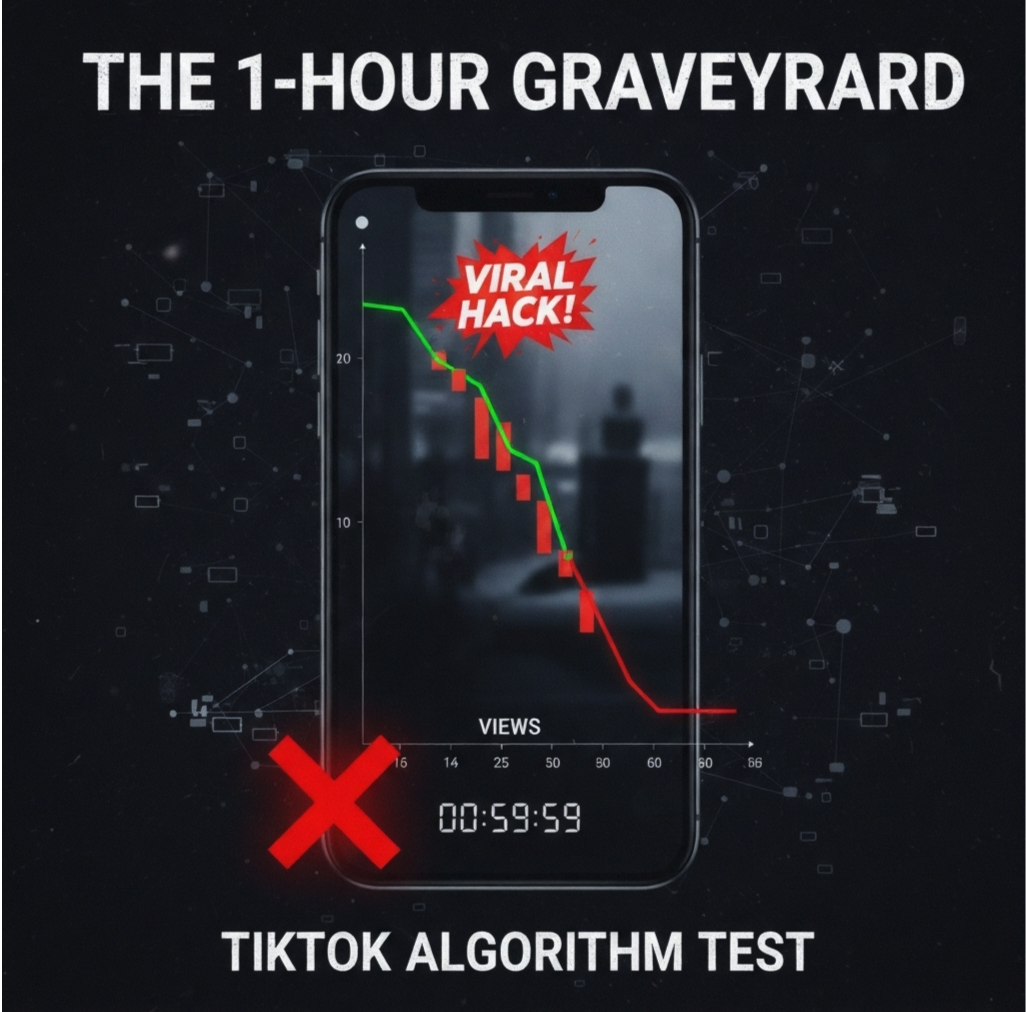
This experience is more common than most creators realize. According to multiple social media research platforms and platform insights, the majority of TikTok videos never escape the first-hour testing phase. Once a video underperforms early, its reach is quietly reduced.
This blog explains why TikTok evaluates content so early, what causes videos to fail in that critical window, and what creators can do to improve first-hour performance.
2. How TikTok’s First-Hour Algorithm Works
When you publish a video, TikTok does not push it to all your followers immediately. Instead, the platform first shows your content to a small sample audience based on your niche, posting history, and viewer interests. This is often referred to as TikTok’s micro-distribution phase.
During the first hour, TikTok closely tracks:
Completion rate (how many people watch the video fully)
Watch time
Replay rate
Engagement (likes, comments, shares)
Viewer retention (how long users stay before scrolling)
If these signals are weak, TikTok limits further distribution. If they are strong, the video is tested with progressively larger audiences.
Reference: TikTok outlines this recommendation system in its official explanation of how the For You feed works.
https://www.tiktok.com/support/faq_detail?id=7543897458892577336&category=web_account
3. The Key Reasons Videos Fail in the First Hour
1. Weak Hook in the First 1–2 Seconds
TikTok is extremely sensitive to early scroll behavior. If viewers swipe away immediately, the algorithm interprets the content as irrelevant. Users decide within seconds whether a video is worth their attention, and slow or unclear openings often eliminate a video’s chance before it begins.
2. Slow Delivery or Delayed Value
TikTok prioritizes pacing. Videos that take too long to reach their point suffer from low completion rates. Since completion rate is one of TikTok’s strongest ranking signals, even a well-produced video can fail if it delays delivering value.
3. Unclear Message or Topic
TikTok relies on content clarity to categorize videos correctly. If your message is confusing or unfocused, the algorithm struggles to identify the right audience. This results in the video being shown to users who are unlikely to engage, leading to faster drop-offs and reduced reach.
4. Poor Visual or Audio Quality
Users scroll quickly, and even minor quality issues can trigger instant swipes. Bad lighting, unclear audio, or distracting visuals reduce watch time. TikTok also avoids pushing content that appears low-quality, as it negatively impacts user experience.
5. Wrong Posting Time
Even strong videos can fail if posted when the target audience is inactive. TikTok relies heavily on early engagement velocity. A slow first hour due to timing alone can prevent a video from receiving future distribution.
6. Trend Usage Without Originality
Trends help with discoverability, but only when creators add a unique angle. Overused formats blend into the feed, making viewers scroll past quickly. TikTok rewards originality, even within trending structures.
7. Inconsistent Niche Targeting
When content varies too widely, TikTok struggles to determine your category and ideal audience. This leads to experimental distribution to mismatched viewers, lowering engagement. Consistency helps the algorithm understand who your content is meant for.
4. How Creators Can Avoid the First-Hour Drop-Off
1. Start Strong
Open with movement, a clear statement, or a visually engaging moment. A strong hook immediately signals relevance.
2. Deliver Value Immediately
Avoid long build-ups. Get to the core idea quickly to improve completion rate.
3. Improve Production Quality
Good lighting, stable framing, and clean audio significantly increase viewer retention, even with simple setups.
4. Stay Consistent With a Defined Niche
Clear content categories help TikTok push videos to viewers who are more likely to watch and engage.
5. Post When Your Audience Is Active
Use analytics to identify peak activity times and post strategically to maximize early engagement.
6. Encourage Genuine Engagement
Ask thoughtful questions or present ideas that invite discussion. Comments and shares are powerful first-hour signals.
5. Final Thoughts
Most TikTok videos do not fail because the ideas are bad. They fail because the first hour does not provide strong enough signals for the algorithm to continue testing them. Understanding how TikTok evaluates content early allows creators to design videos that perform better from the moment they are posted.
If you’re interested in deeper insights on content strategy, platform behavior, and audience psychology across social media, you can explore more resources at Reachism — a platform focused on understanding how digital content actually performs in real-world environments.
Visit: https://reachism.com/