YouTube is the second-largest search engine in the world, yet many creators underutilize its SEO potential. Posting videos without a strategy for keywords, metadata, and search optimization is like setting up a store in the middle of nowhere you might have amazing products, but no one sees them.
Understanding YouTube SEO
YouTube SEO is not just about adding keywords to your video title. It’s about signaling to YouTube exactly what your video is about and who it’s for, while ensuring the algorithm predicts strong engagement and watch time.
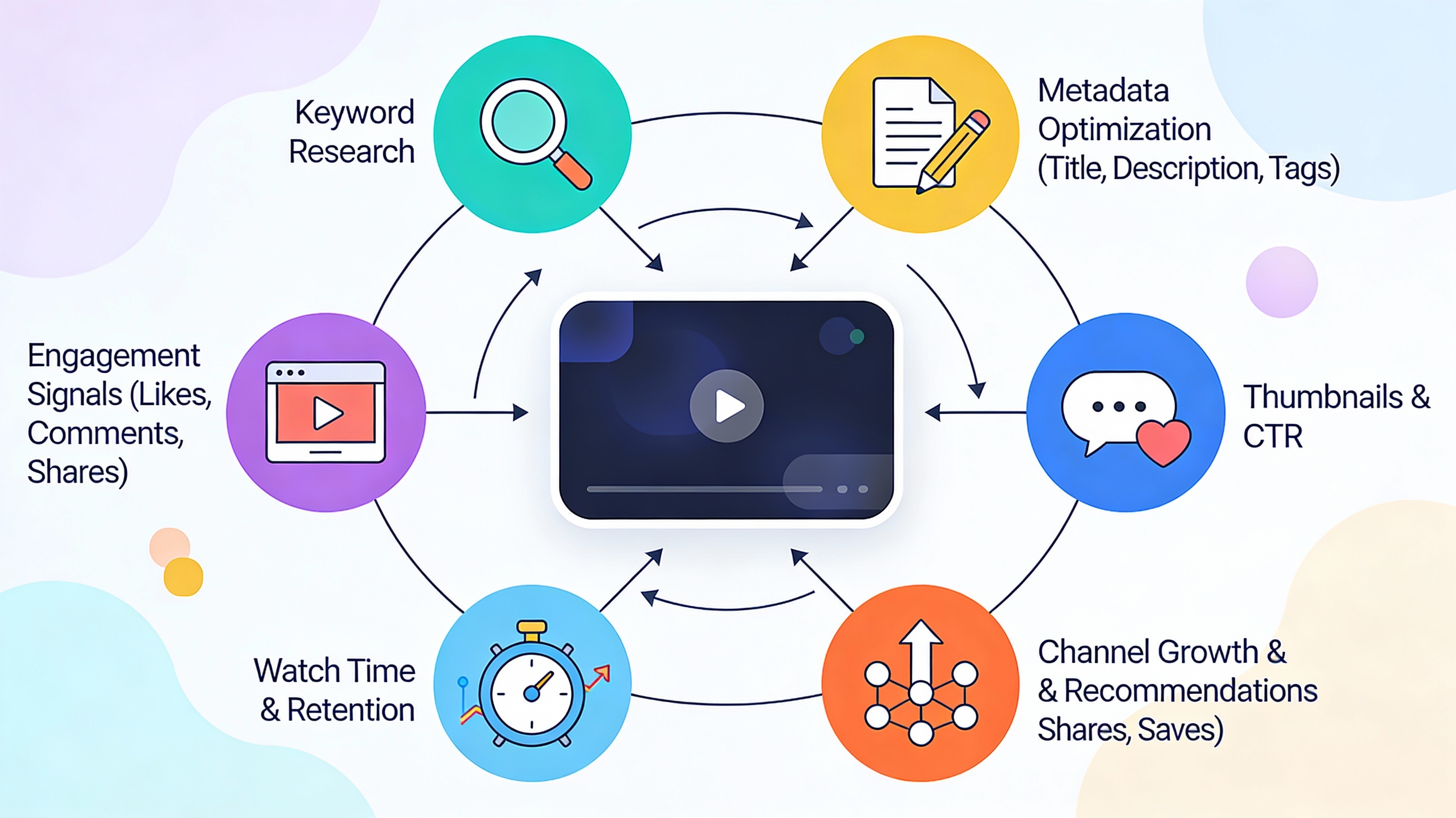
YouTube ranks videos based on multiple factors:
Click-through rate (CTR) on search and suggested pages
Watch time and retention
Engagement (likes, comments, shares, and saves)
Session duration (how long viewers stay on YouTube after your video)
Reference:
YouTube Creator Academy explains how search and discovery work:
YouTube Search & Discovery
Keywords: How to Find the Right Ones
Keywords are the foundation of YouTube SEO. They signal topic relevance to both YouTube and viewers.
Steps to find strong keywords:
Start with seed keywords — the topic of your video
Use YouTube autocomplete — see what people are searching
Check competitor videos — analyze top-performing titles and descriptions
Leverage tools like TubeBuddy, VidIQ, or Reachism insights for trending topics
Placement tips:
Include your primary keyword in the title
Add it naturally in the description
Use relevant tags, though tags are secondary signals today
Metadata That Still Works
Metadata includes your title, description, and tags, and it’s one of the most important ways YouTube understands your video.
Titles
Must include your primary keyword early
Should be clickable but clear, avoiding clickbait
Use numbers, “how to,” or problem-solving language
Example:
“YouTube SEO 2026: Keywords, Metadata & Search Hacks That Still Work” ✅
Descriptions
First 1–2 sentences are most important show value and include the keyword naturally
Include timestamps, links to related content, or internal playlist links
How to Turn One Video Into 20 Pieces of Content — shows description repurposing
Tags
Use a mix of broad and long-tail tags
Include keywords your audience is actually searching for
Tags aren’t as critical as title/description but still help clustering
Backlinko’s YouTube SEO research shows tags, titles, and descriptions affect discoverability:
Backlinko: YouTube SEO
Search Hacks That Still Work in 2026
a) Use Autocomplete for Ideas
Type your topic into YouTube search and note what suggestions appear these are real user queries.
b) Competitor Reverse Engineering
Analyze the top videos in your niche:
Which keywords appear in their titles, descriptions, and tags?
How long are the videos?
What retention techniques do they use?
YouTube Hooks That Work — shows how to use competitor insights for hooks
c) Use Playlists Strategically
Playlists help cluster related content, signaling to YouTube that your channel is an authority on a topic. They also improve session watch time, which boosts discoverability.
d) Optimize Thumbnails for CTR
Bright, clear visuals
Consistent branding
Faces, objects, or text overlays that match the keyword intent
Engagement & Retention Signals
SEO isn’t just keywords. YouTube cares how users interact with your video.
Watch time & retention: videos that hold viewers longer rank higher
Likes, comments, and shares: measure audience approval
Saves: shows value and increases long-term visibility
Repurpose Content for Maximum SEO
One video can power multiple assets:
Shorts for quick discovery
Clips for social media promotion
Blog posts for organic traffic
Using this approach increases keyword footprint and authority without creating new videos constantly.
Track & Optimize Continuously
SEO is not set-and-forget.
Track impressions, CTR, watch time, and retention
Update titles, thumbnails, and descriptions for underperforming videos
Experiment with keyword variations and metadata tweaks
Reachism can help creators analyze performance, suggest keyword optimizations, and monitor trends to keep your YouTube SEO strong.