- Why “Stopping” Matters More Than Any Other Metric
- The Core Rule of Scroll-Stopping Content
- 1. Curiosity: Showing the Gap, Not the Answer
- 2. Relevance: Making It Feel Personally About Them
- 3. Tension: Showing Something Is Off or Unfinished
- The First 2 Seconds Matter More Than the First 30
- Visual Signals That Stop the Scroll
- The Scroll-Stopping Formula (Put Together)
- Why Clickbait Fails Long-Term (and What to Do Instead)
- Where Reachism Fits in the Scroll-Stopping Equation
- Final Takeaway
Every platform rewards the same behavior: attention.
But attention isn’t earned politely anymore it’s interrupted.
On Instagram, TikTok, YouTube Shorts, and even long-form YouTube, creators are not competing with “other creators.” They’re competing with boredom, habit, and the user’s thumb. The scroll is the default behavior. Stopping is the exception.
This article breaks down the scroll-stopping formula what actually makes someone pause mid-scroll, why it works psychologically, and how to apply it without relying on clickbait or gimmicks.
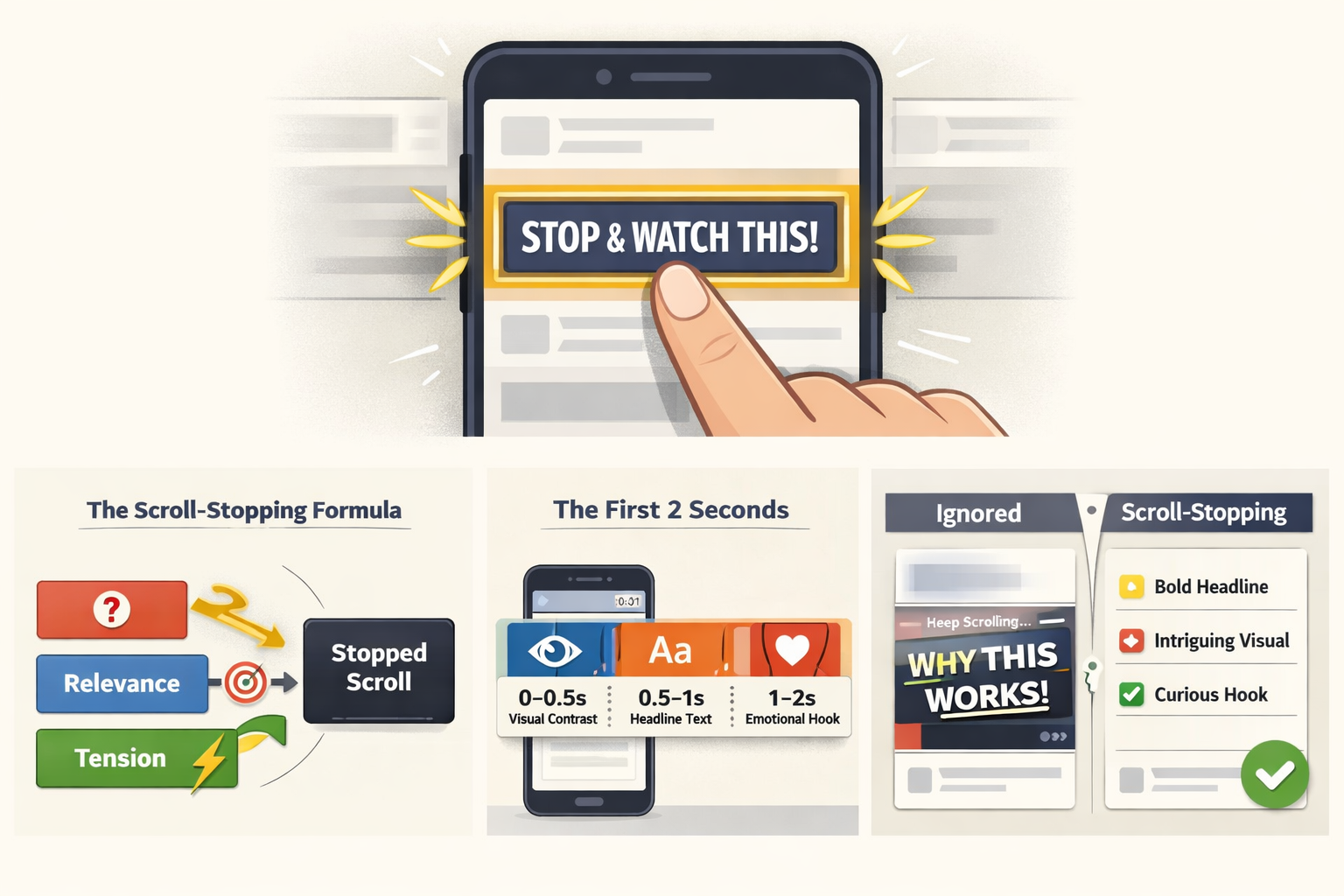
Why “Stopping” Matters More Than Any Other Metric
Before a video can be watched, liked, shared, or followed, one thing must happen first: the scroll must stop.
Platforms measure this moment implicitly:
Did the viewer hesitate?
Did they watch past the first second?
Did they choose this video instead of the next one?
If the answer is no, nothing else matters not your editing, not your value, not your CTA.
Think of it like a storefront window. If people don’t stop walking to look inside, the best product in the world won’t sell.
“Platforms like YouTube expand a video’s reach only when early engagement signals indicate real viewer interest this is explained in depth in Audience Signals: How YouTube Decides Who to Push Your Video To.”
The Core Rule of Scroll-Stopping Content
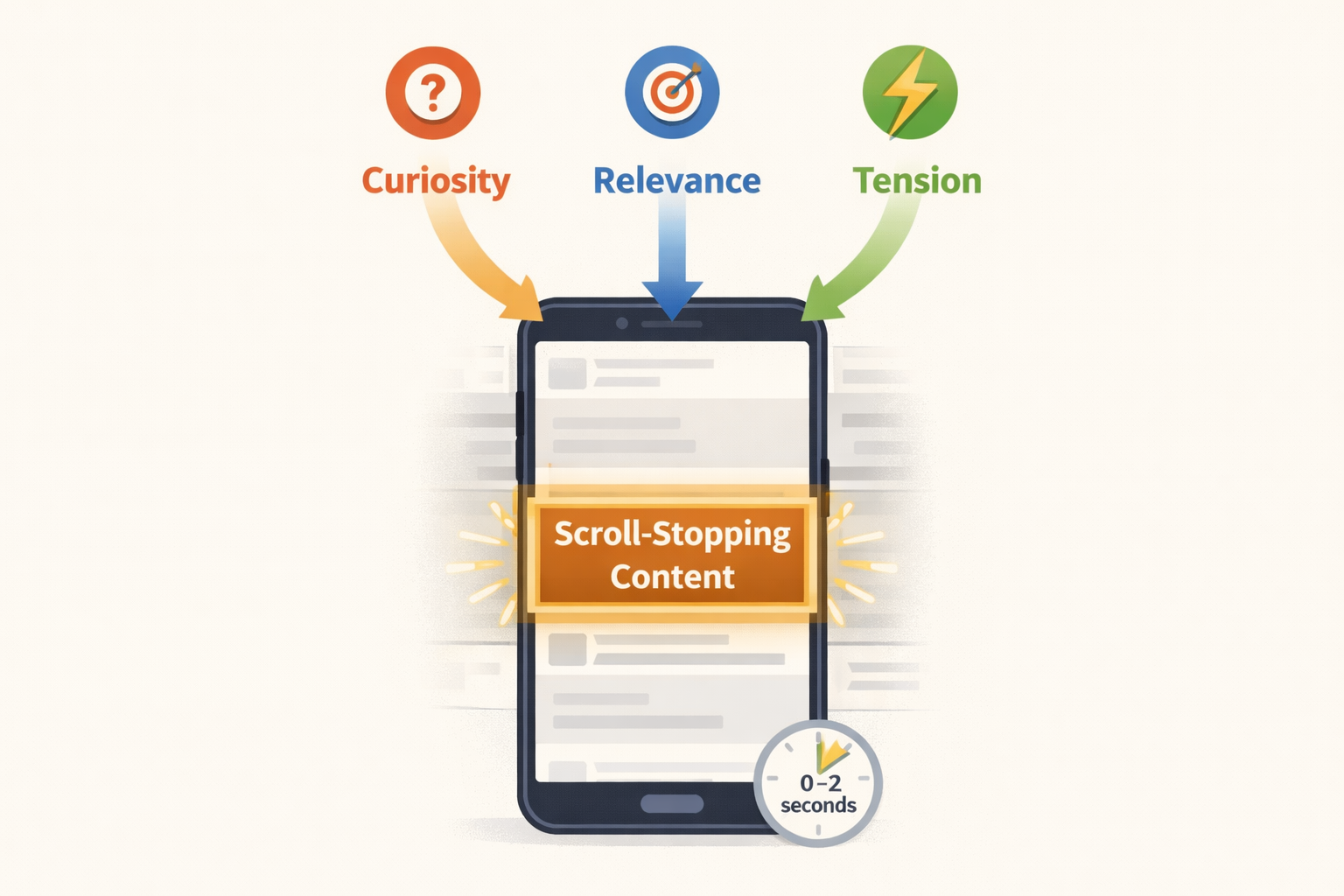
People stop scrolling when they feel one of three things instantly:
Curiosity
Relevance
Tension
“Stopping the scroll is just the first step; keeping viewers engaged and prompting them to rewatch is equally important, as detailed in How to Make Reels People Watch Twice.”
1. Curiosity: Showing the Gap, Not the Answer
Curiosity isn’t about mystery for mystery’s sake. It’s about creating a knowledge gap that feels uncomfortable to ignore.
What works
“This mistake is killing your reach (and most creators don’t realize it).”
“I tried this for 30 days and the result surprised me.”
“Nobody talks about this part of going viral.”
Why it stops the scroll
The brain dislikes unfinished loops. When a viewer senses there’s missing information that matters to them, stopping feels easier than scrolling past.
What doesn’t work
Vague hype with no direction
Overused phrases without context
Clickbait that never delivers (this increases negative signals later)
Curiosity must promise something specific even if the reveal comes later.
2. Relevance: Making It Feel Personally About Them
People don’t stop for content that’s “interesting.”
They stop for content that feels personally relevant.
Examples of instant relevance
“If you post Reels but get no saves, this is why.”
“Small businesses make this mistake on Instagram.”
“If your videos get views but no followers, listen.”
Why this works
The viewer subconsciously asks:
“Is this about people like me?”
If the answer is yes, stopping is automatic.
This is why niche-specific language outperforms general advice. “Creators” is broad. “Faceless creators,” “local businesses,” or “new YouTubers under 1k subs” feels targeted.
3. Tension: Showing Something Is Off or Unfinished
Tension creates emotional friction. Something feels unresolved, risky, or wrong—and the viewer wants closure.
Common tension triggers
A surprising statement that contradicts common advice
A visible before/after gap
A warning that something is being done incorrectly
Examples:
“This advice sounds smart—but it’s actually hurting you.”
“Everyone tells you to do this. They’re wrong.”
“This video should not be working… but it is.”
Tension works because it signals that scrolling away might cost the viewer something.
The First 2 Seconds Matter More Than the First 30
Creators often obsess over hooks in the first 5–10 seconds. In reality, the scroll decision happens almost immediately. (Hooks and first impressions)
What viewers notice instantly
Visual contrast
Facial expression or motion
On-screen text
An unexpected opening line
If nothing visually or verbally signals “this is different,” the scroll continues before the message even registers.
Visual Signals That Stop the Scroll
You don’t need flashy edits. You need contrast and clarity.
Effective visual techniques:
Sudden movement in the first frame
A clear, readable on-screen headline
An unusual angle or framing
A visible result (dashboard, before/after, transformation)
Think less like a filmmaker and more like a headline writer.
The Scroll-Stopping Formula (Put Together)
A strong opening usually follows this structure:
Specific audience + tension or curiosity + implied payoff
Examples:
“If your Reels get views but no followers, this is why.”
“This small change doubled my retention and I didn’t expect it.”
“Most creators ruin their first 3 seconds without realizing it.”
The key is not shouting louder it’s being more precise.
Why Clickbait Fails Long-Term (and What to Do Instead)
Clickbait can stop the scroll once.
But if the content doesn’t match the promise, viewers bounce, click “Not interested,” or disengage later.
Platforms learn fast.
A better approach is promise alignment:
The opening line must match the actual value
The first 10 seconds should confirm the click was worth it
The ending should feel resolved, not rushed
Scroll-stopping gets you attention. Satisfaction earns distribution.
Where Reachism Fits in the Scroll-Stopping Equation
Early visibility helps test whether a scroll-stopping idea actually works. Reachism positions itself around helping creators and brands get initial exposure so real audience signals can form.
But exposure alone doesn’t stop scrolling.
The content still has to earn the pause.
Used correctly, early distribution amplifies good hooks—it doesn’t replace them. The formula still applies: relevance, curiosity, and tension decide whether viewers stay.
Final Takeaway
You don’t stop the scroll by being louder, longer, or more complex.
You stop it by:
Making the viewer feel seen
Creating a moment of curiosity or tension
Visually signaling value instantly
Delivering on the promise you make
Master that moment, and everything else watch time, engagement, growth has a chance to follow.