YouTube is often seen as a game dominated by massive channels with millions of subscribers. But in reality, small channels can earn a lot more than most people expect. Monetization isn’t just about hitting thresholds it’s about understanding the system, creating the right content, and using multiple revenue streams intelligently.
Many creators focus purely on views. That’s a mistake. Small channels that grow revenue quickly understand that watch time, engagement, niche authority, and content structure matter more than raw numbers.
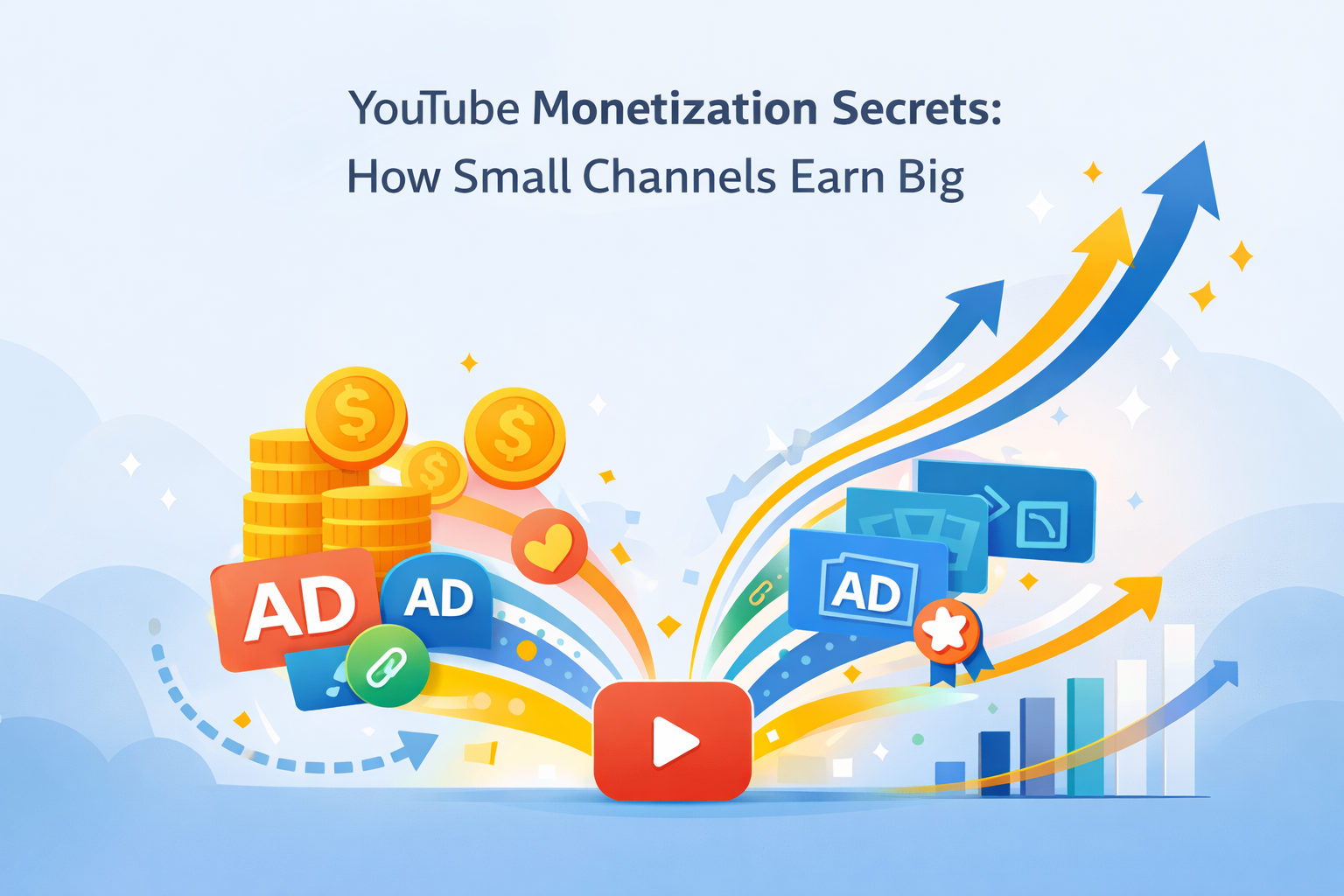
Why Small Channels Can Monetize Faster Than Big Channels Think
While big channels have massive reach, they also have higher audience expectations and content saturation. Small channels often:
Have tighter niche focus
Can experiment with formats quickly
Benefit from higher engagement per video
👉 The Micro-Niche Strategy: Growing Faster by Going Smaller
By creating highly targeted content, small channels can attract viewers who are more likely to click ads, follow affiliate links, and engage in sponsorship offers.
Ad Revenue Isn’t Everything
Many creators assume YouTube ad revenue (AdSense) is the primary income source. While ads are important, small channels maximize earnings by layering monetization streams:
Affiliate links: Niche-relevant products convert better because the audience is targeted.
Sponsorships: Brands love high-engagement, niche channels for smaller campaigns.
Merch & digital products: Guides, templates, or courses can yield revenue beyond ad dependency.
The Role of Watch Time & Retention
YouTube doesn’t just pay for views—it pays for engagement and retention. Small channels that maximize watch time often outperform larger channels with lower retention rates.
Strategies include:
Structuring videos with hooks that grab attention in the first 5 seconds
Creating content in series or thematic playlists to increase session watch time
Ensuring each video packs value densely throughout
👉 The Psychology of Watch Time: How to Design Addictive Videos
By stacking videos in playlists or linked series, small channels can increase total watch time, signaling YouTube’s algorithm to push the content to more viewers even without a massive subscriber base.
Sponsorships: The Secret Weapon for Small Channels
Small channels often think sponsors want big numbers only. That’s outdated thinking. Niche channels with high engagement and clear audience alignment can negotiate small, frequent sponsorship deals.
Key points for small creators:
Focus on a specific, loyal audience
Track engagement metrics (click-through rates, watch time)
Use YouTube analytics to pitch sponsors confidently
Content Strategy That Maximizes Monetization
Small channels that earn big understand content patterns that convert. This includes:
High-value educational videos that solve a problem
Step-by-step tutorials in your niche
Evergreen content that earns continuously
👉 How to Reverse-Engineer Viral Videos in Your Niche
Additionally, integrating call-to-action overlays for affiliate links, email signups, or product mentions within videos increases revenue without annoying viewers.
The Role of Community & Direct Support
Monetization is also social. Small channels can leverage:
Memberships & Patreon: loyal followers are willing to support small creators directly
Live streams with super chats
Comment engagement that encourages recurring views
Small channels that cultivate community often earn more per viewer than larger channels with passive audiences.
Final Thoughts
Monetizing a small YouTube channel isn’t about luck or viral hits. It’s about strategy, niche targeting, and layered revenue streams. By focusing on watch time, retention, affiliate and sponsorship opportunities, and high-value content, small channels can consistently earn more than most expect even without massive subscriber counts.
For creators willing to approach YouTube thoughtfully, small channels can earn big while staying agile and growing sustainably.