- How YouTube Virality Actually Works
- Why “Posting More” Usually Backfires
- Upgrade Clicks Without Changing the Video
- Fix the First 60 Seconds (This Is Where Virality Is Won)
- Turn One Video Into a Traffic Engine
- Stop Chasing Trends Start Owning Topics
- Optimize for “Second Watch,” Not Just First View
- A Simple “Don’t Post More” Growth Framework
- Virality Is a System, Not a Schedule
If you think going viral on YouTube requires posting more often, longer videos, or burning out on daily uploads that’s the fastest way to stall growth.
Most YouTube channels don’t fail because of volume.
They fail because their existing videos aren’t engineered for momentum.
Virality on YouTube is not about output.
It’s about leverage.

How YouTube Virality Actually Works
YouTube does not push videos because they’re new.
It pushes them because viewers respond better than expected.
Every video is constantly evaluated on:
Click-through rate (title + thumbnail)
Watch time (especially first 30–60 seconds)
Session duration (do viewers keep watching YouTube after?)
Viewer satisfaction signals (rewatches, comments, likes)
If a video outperforms similar videos for a specific audience, YouTube keeps expanding the test.
This is why old videos can suddenly go viral months later YouTube’s own recommendation system confirms this behavior:
https://support.google.com/youtube/answer/141805
Why “Posting More” Usually Backfires
Posting more does not fix:
Weak titles
Low retention
Confused positioning
Poor topic selection
In fact, posting more often locks in bad signals faster.
YouTube learns from patterns.
If most of your uploads underperform, the platform learns what not to push.
The smarter move is to make fewer videos work harder.
Upgrade Clicks Without Changing the Video
Most creators try to improve content first.
But YouTube only shows content that gets clicked.
Your biggest viral lever is title + thumbnail, not production.
What Actually Works
One clear idea per video
A visible emotional contrast (before vs after, mistake vs truth)
Curiosity without confusion
Bad title:
“My YouTube Growth Tips”
Better title:
“Why Small Channels Grow Faster Than Big Ones”
This same click psychology is explained in depth in this breakdown of viewer behavior:
https://reachism.com/blog/how-to-craft-titles-thumbnails-that-print-views
Key point:
You can relaunch an old video just by improving its packaging.
No new upload required.
Fix the First 60 Seconds (This Is Where Virality Is Won)
Most videos lose 40–60% of viewers in the first minute.
That instantly kills viral potential.
YouTube heavily weights early retention, because it predicts long-term satisfaction.
Fast Fix
Remove:
Long intros
Branding sequences
“In this video…” explanations
Start with:
The outcome
The mistake
The tension
If you want a structured way to design intros that viewers don’t skip, this explains it clearly:
https://reachism.com/blog/breaking-down-the-perfect-youtube-script-structure
You don’t need better ideas.
You need earlier value.
Turn One Video Into a Traffic Engine
Virality compounds when videos feed each other.
Instead of posting more, build internal momentum:
End videos by previewing the next one
Link related videos in pinned comments
Reference older videos naturally
This increases:
Session time
Channel authority
Recommendation velocity
YouTube favors channels that keep people on YouTube, not just on one video.
This is the same audience-signal logic used across platforms:
https://reachism.com/blog/audience-signals-how-youtube-decides-who-to-push-your-video-to
Stop Chasing Trends Start Owning Topics
Trends spike views.
Topics build repeat viewership.
YouTube is a search + recommendation hybrid. That means:
Evergreen topics outperform viral moments
Authority beats novelty over time
Examples:
❌ “This YouTube update just dropped”
✅ “Why most YouTubers never break 10K subs”
Topic ownership creates:
Higher suggested traffic
Stronger channel identity
More predictable growth
Optimize for “Second Watch,” Not Just First View
True virality happens when viewers:
Watch another video
Or rewatch the same one
YouTube tracks satisfaction beyond the first click.
How to Increase Second Watches
Open loops that resolve later
Reference a concept, then fully explain it at the end
Make insights dense enough to rewatch
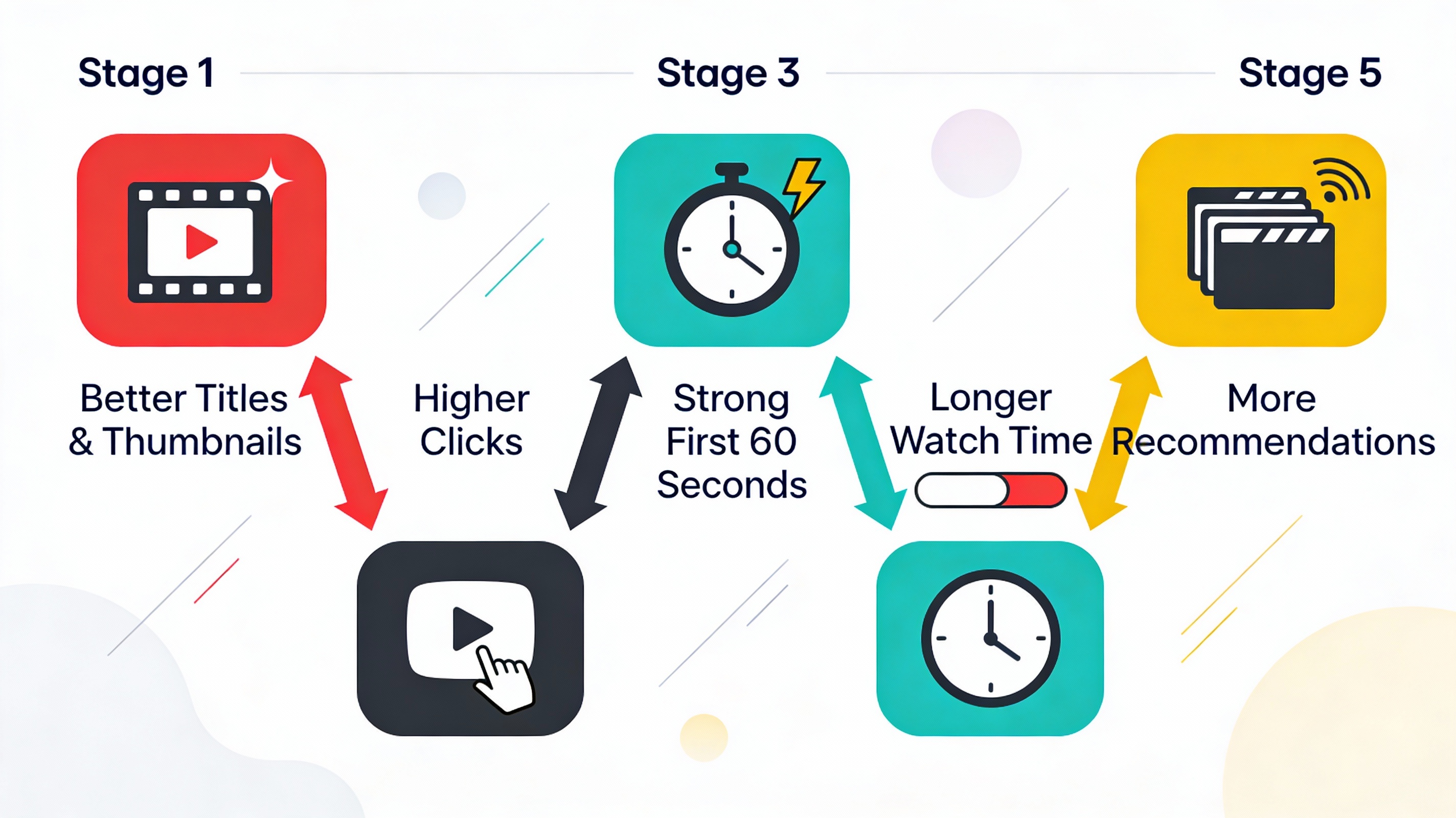
A Simple “Don’t Post More” Growth Framework
Instead of uploading again, do this:
Pick your best-performing video
Improve the title + thumbnail
Tighten the first 60 seconds
Link it to 1–2 related videos
Let YouTube retest it
One optimized video can outperform ten rushed uploads.
Virality Is a System, Not a Schedule
You don’t go viral by working harder.
You go viral by aligning with how YouTube actually measures success.
When your videos:
Earn clicks
Hold attention
Create viewing sessions
Deliver satisfaction
…YouTube does the distribution for you.
Post less. Optimize more. Let leverage do the work.