- Why Titles & Thumbnails Matter More Than Ever
- The Psychology Behind Click Decisions
- How to Craft Titles & Thumbnails That Print Views
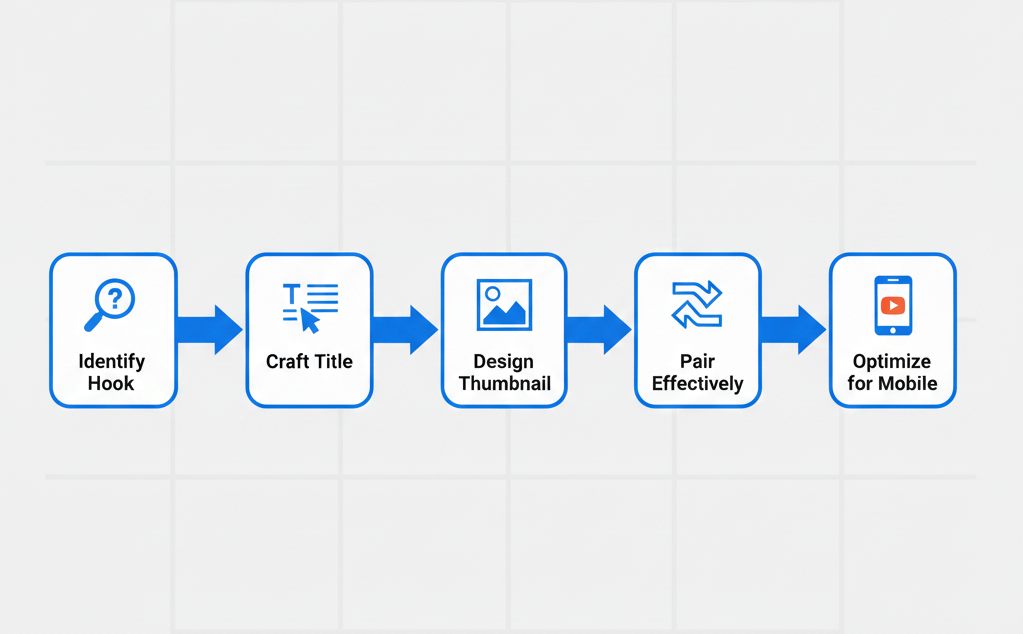
- 1. Identify the Core Benefit or Curiosity Trigger
- 2. Create Clear and Specific Titles
- 3. Design a Focused Thumbnail
- 4. Pair Titles and Thumbnails Effectively
- 5. Optimize for Mobile & Early Click Behavior
- 6. Avoid Misleading Clickbait
- How Reachism Fits Into This Strategy
Views are not earned after a video is published. They are earned before someone clicks.
No matter how valuable your content is, it lives or dies at the same moment: when a user scrolls past it. Titles and thumbnails are not just packaging; they are decision triggers. Platforms like YouTube, Instagram, and TikTok all test the same thing first: will people stop and choose this?
If they don’t, distribution slows or stops entirely.

Why Titles & Thumbnails Matter More Than Ever
Modern recommendation systems are built around early audience response. The first signals platforms read are clicks, scroll-stops, and immediate engagement. This is why many creators experience strong ideas failing silently poor packaging prevents the content from ever being tested at scale.
This dynamic is closely tied to what Reachism explains in The Scroll-Stopping Formula: how to make people STOP instantly, where the first visual impression determines whether a piece of content even earns attention.
The Psychology Behind Click Decisions
Humans do not analyze content feeds logically. They skim, compare, and react emotionally often in under a second.
A title and thumbnail must trigger:
Recognition (“this is for me”)
Curiosity (“I need to know why”)
Relevance (“this solves my problem now”)
This same psychology explains why many videos fail early, as outlined in Why Most TikTok Videos Die in the First Hour, where weak initial hooks kill momentum before algorithms can help.
How to Craft Titles & Thumbnails That Print Views
Many creators boost their video visibility without altering the content itself, simply by optimizing titles and thumbnails. Let’s explore exactly how to do this, with clear examples and actionable steps.
1. Identify the Core Benefit or Curiosity Trigger
How: The first step is understanding why someone would want to watch your video. Ask yourself: What problem does this video solve? What curiosity does it spark? The clearer your value proposition, the higher your click potential.
Example:
Instead of titling a video “Editing Tips”, make it specific: “Cut Your Editing Time in Half Without Losing Quality”. This tells viewers exactly what they will gain and triggers curiosity about how it’s done.
This principle aligns with what is discussed in The Scroll-Stopping Formula: how to make people STOP instantly, emphasizing the power of first impressions.
2. Create Clear and Specific Titles
How: Titles should be concise, specific, and compelling. Avoid vague words like “tips” or “guide.” Focus on results, emotions, or outcomes. Numbers, timeframes, or measurable results make titles even more clickable.
Example:
Instead of “Instagram Growth Tips”, use “Grow Your Instagram Followers 50% in 30 Days”. This is specific, outcome-driven, and sets expectations immediately.
Creators can also learn from How to Make Reels People Watch Twice, where it emphasizes on matching titles to actual content outcomes to boost retention.
3. Design a Focused Thumbnail
How: Your thumbnail is a visual promise. Keep it simple: one main idea, clear text if necessary, expressive faces, or symbolic icons. High contrast helps it stand out in crowded feeds.
Example:
For a video titled “Cut Editing Time in Half”, the thumbnail could show a frustrated creator on one side and a happy creator with a faster workflow on the other. The visual contrast tells the story immediately.
This technique mirrors Why Hookless Reels Sometimes Perform Better, which shows that clarity and curiosity outperform aggressive visual clutter.
4. Pair Titles and Thumbnails Effectively
How: Titles and thumbnails should work together to create a curiosity loop. Avoid repetition; instead, complement. The title should provide context, the thumbnail should evoke curiosity or emotion.
Example:
Title: “Why Your Videos Get No Views”
Thumbnail: A frustrated creator looking at an empty screen with subtle text: “This is why”.
Together, they raise a question in the viewer’s mind that can only be answered by watching the video.
Pairing titles and thumbnails this way also relates to How to Reverse-Engineer Viral Videos in Your Niche understanding what works in your niche helps create irresistible packaging.
5. Optimize for Mobile & Early Click Behavior
How: Most viewers browse on mobile, so thumbnails must be readable at small sizes and titles concise. Early clicks and watch time drive algorithmic distribution, so first impressions are everything.
Example:
A mobile-friendly thumbnail for “3 Tricks to Grow Instagram Engagement in 7 Days” should use bold, readable text and a single expressive icon or face. Ensure the title is short enough to read without truncation.
HubSpot confirms that visual clarity and mobile optimization drive higher engagement across social platforms.
6. Avoid Misleading Clickbait
How: Misleading thumbnails or exaggerated titles may get clicks initially, but they hurt watch time and trust, leading platforms to reduce distribution. Always ensure your packaging matches content delivery.
Example:
Instead of “You Won’t Believe This Trick” for a simple tutorial, say “3 Quick Tricks to Improve Your Editing Workflow”. It still sparks curiosity but aligns with content delivery.
YouTube’s official guide emphasizes that misleading packaging can negatively affect recommendations.
How Reachism Fits Into This Strategy
Reachism helps creators launch content with strong visibility and social proof, accelerating early traction while ensuring it aligns with watch time optimization. By combining behavioral design for titles and thumbnails with algorithmic understanding, Reachism ensures initial clicks translate into engagement signals platforms reward. Think of it as giving your video a head start while letting quality and audience satisfaction determine long-term reach.