- Most YouTubers Never Earn Algorithm Trust
- Weak First Impressions Kill Videos Instantly
- They Choose Topics Too Broad to Win
- They Confuse Views With Retention
- Inconsistent Strategy, Not Inconsistent Posting
- Titles and Thumbnails That Explain Instead of Compel
- Expecting Motivation to Carry the Channel
- How Reachism Approaches YouTube Growth Differently
- The Truth Nobody Tells You
Most YouTubers don’t fail because they’re lazy. They fail because they’re following advice that sounds logical but is algorithmically wrong.
Behind every “I tried YouTube and it didn’t work” story is a set of structural mistakes that quietly kill growth before it ever has a chance to compound. These are the reasons creators rarely hear, because they’re uncomfortable, non-glamorous, and don’t fit into quick motivational posts.
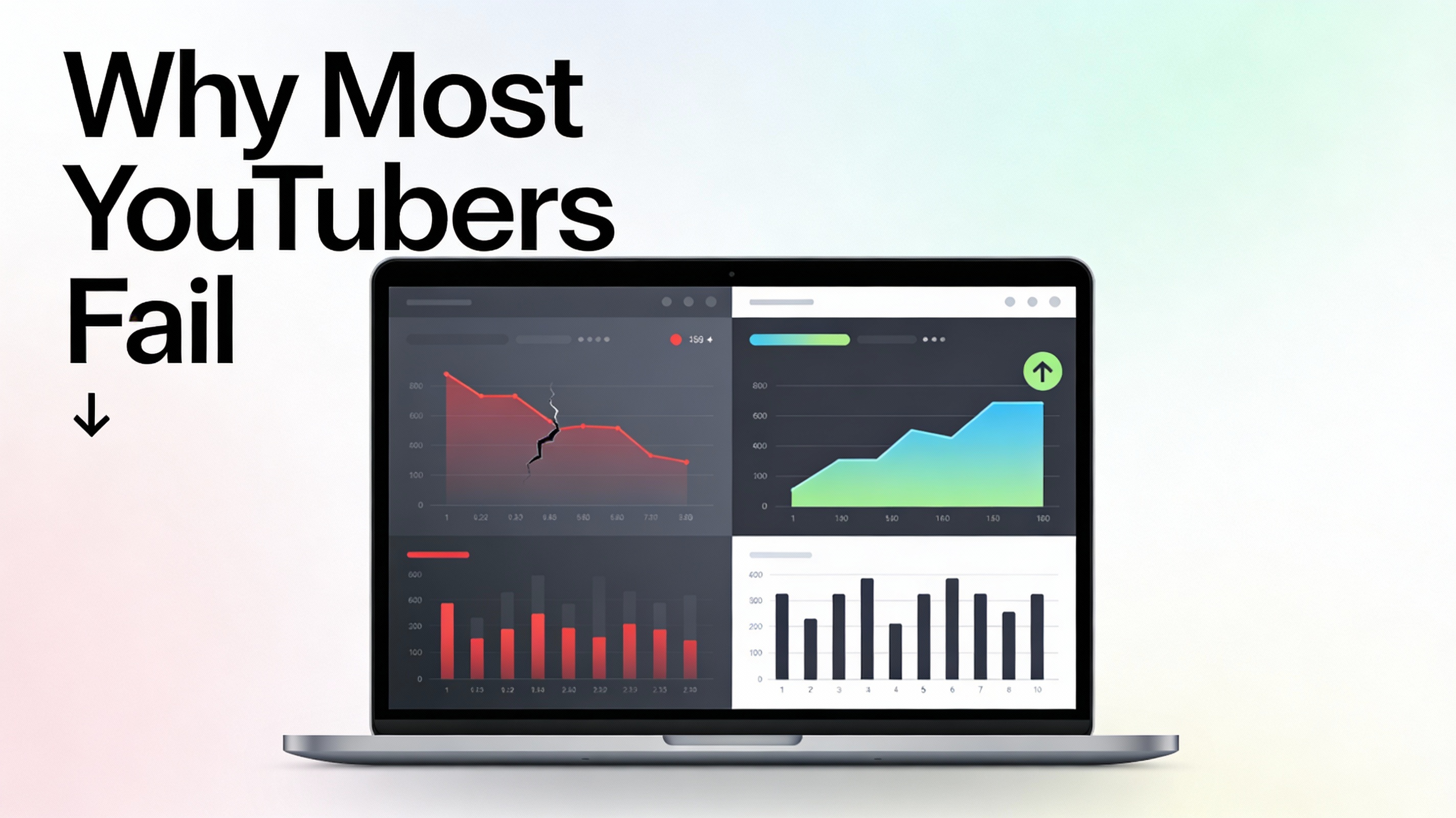
Most YouTubers Never Earn Algorithm Trust
YouTube doesn’t promote channels.
It promotes individual videos that prove they can hold attention.
Most creators assume:
“If I post consistently, YouTube will eventually push me.”
In reality, YouTube asks a different question:
“Does this video satisfy a specific audience better than alternatives?”
If your early videos don’t generate strong audience signals click-through rate, watch time, session continuation YouTube has no incentive to test your content further.
This is why understanding how YouTube reads viewer behavior matters more than posting frequency.
🔗 https://reachism.com/blog/audience-signals-how-youtube-decides-who-to-push-your-video-to
Weak First Impressions Kill Videos Instantly
Many YouTubers lose before the video even starts.
Your:
Title
Thumbnail
First 5 seconds
decide whether the algorithm ever gets meaningful data.
Creators focus on:
Being informative
Being friendly
Being “themselves”
But YouTube prioritizes viewer curiosity and expectation.
If the opening seconds don’t immediately answer “Why should I keep watching?”, viewers leave and the video stops getting impressions.
🔗 https://reachism.com/blog/the-first-5-seconds-rule-on-youtube-why-viewers-click-away
They Choose Topics Too Broad to Win
“YouTube rewards niches” is true—but incomplete.
The real issue isn’t niche size.
It’s topic clarity.
Most failing YouTubers make content that’s:
Broad
Vague
Hard to categorize
When YouTube can’t clearly identify who a video is for, it struggles to test it against the right viewers.
Smaller, sharper topics outperform broad ones because they create stronger early engagement signals, which leads to wider distribution later.
This is why creators who go smaller often grow faster.
🔗 https://reachism.com/blog/the-micro-niche-strategy-growing-faster-by-going-smaller
They Confuse Views With Retention
Many creators chase:
Viral ideas
Trend formats
High click potential
But YouTube doesn’t reward clicks alone it rewards sustained attention.
A video with:
High CTR but low watch time
will lose toModerate CTR with strong retention
Most YouTubers fail because their content starts strong but decays fast. Long intros, slow pacing, or delayed value cause viewers to drop off before YouTube can trust the video.
Understanding watch-time psychology is more important than any growth hack.
🔗 https://reachism.com/blog/the-psychology-of-watch-time-how-to-design-addictive-videos
Inconsistent Strategy, Not Inconsistent Posting
The problem isn’t that creators post irregularly.
It’s that they post inconsistently in meaning.
Common patterns:
Different topic every upload
Different audience every week
Different value proposition every video
YouTube builds audience profiles based on patterns. When your content doesn’t repeat a recognizable promise, the algorithm can’t learn who to show it to.
Consistency isn’t about schedule it’s about conceptual alignment.
Titles and Thumbnails That Explain Instead of Compel
Most YouTubers design titles to be accurate.
Winning YouTubers design titles to be irresistible.
The mistake:
“Let me clearly explain what this video is about.”
The fix:
“Let me create curiosity that only this video can resolve.”
Thumbnails and titles are not summaries. They’re entry points into a story.
This is why creators with average production quality often outperform technically better channels they understand click psychology.
🔗 https://reachism.com/blog/how-to-craft-titles-thumbnails-that-print-views
Expecting Motivation to Carry the Channel
YouTube rewards systems, not moods.
Creators who rely on:
Inspiration
Motivation
“Feeling creative”
burn out faster than those who build repeatable content frameworks.
The most successful YouTubers don’t wake up asking what to post. They already know:
Their audience’s core problem
Their content format
Their value promise
That clarity removes friction and friction is what kills most channels.
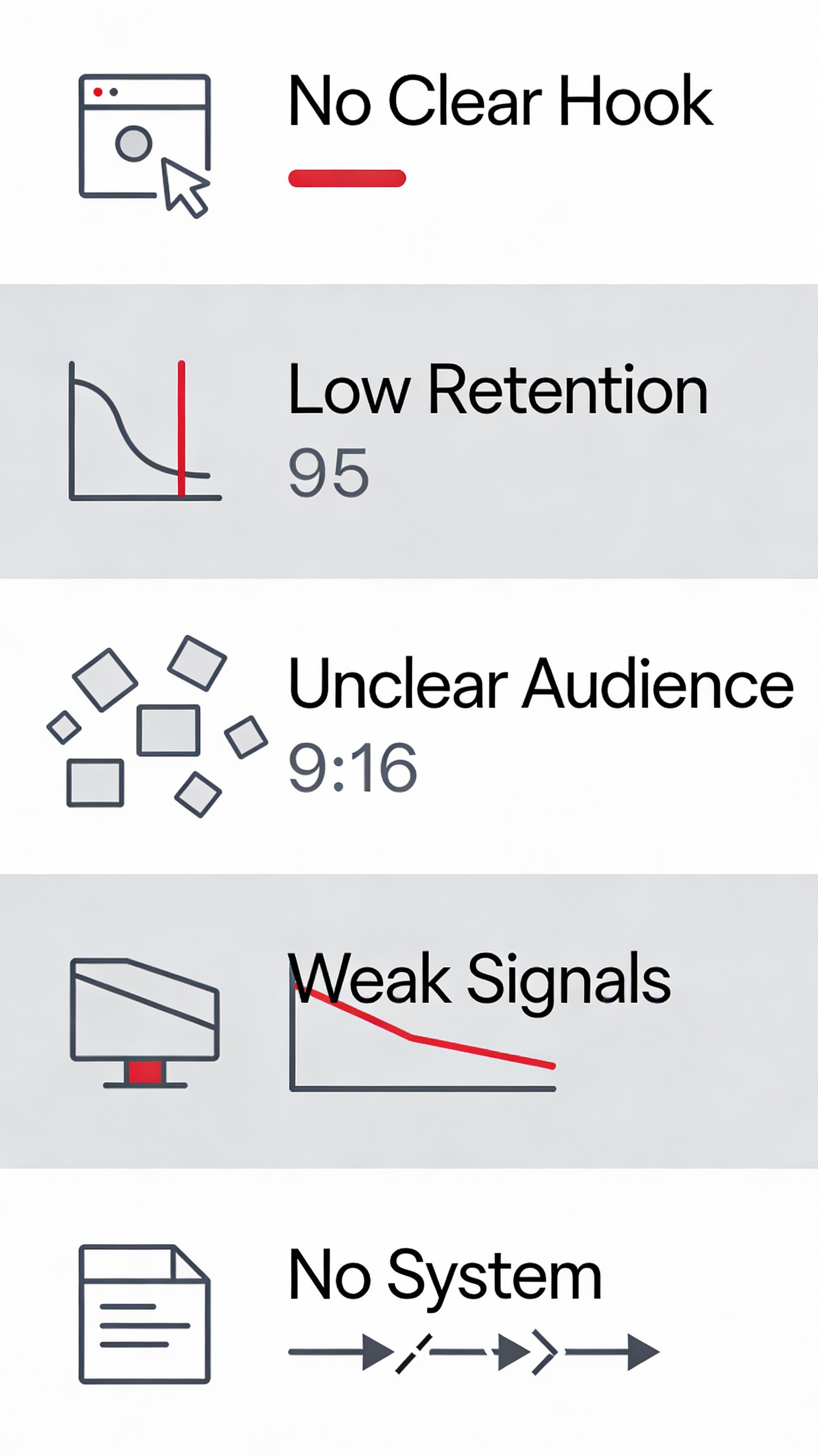
How Reachism Approaches YouTube Growth Differently
At Reachism, we don’t treat YouTube as a creativity contest.
We treat it as a behavior-driven distribution system.
Our approach focuses on:
Audience signal alignment
Retention-first scripting
Topic authority, not topic randomness
Repeatable content logic
Human psychology before algorithm myths
Instead of chasing virality, we build trust loops with viewers and with the platform.
The Truth Nobody Tells You
Most YouTubers don’t fail because they’re bad creators.
They fail because:
They misunderstand how YouTube evaluates videos
They prioritize output over signals
They chase growth tactics instead of audience clarity
YouTube success isn’t mysterious. It’s mechanical.
Once you understand what actually stops videos from spreading, growth becomes less emotional and far more predictable.
That’s when YouTube stops feeling impossible and starts feeling learnable.